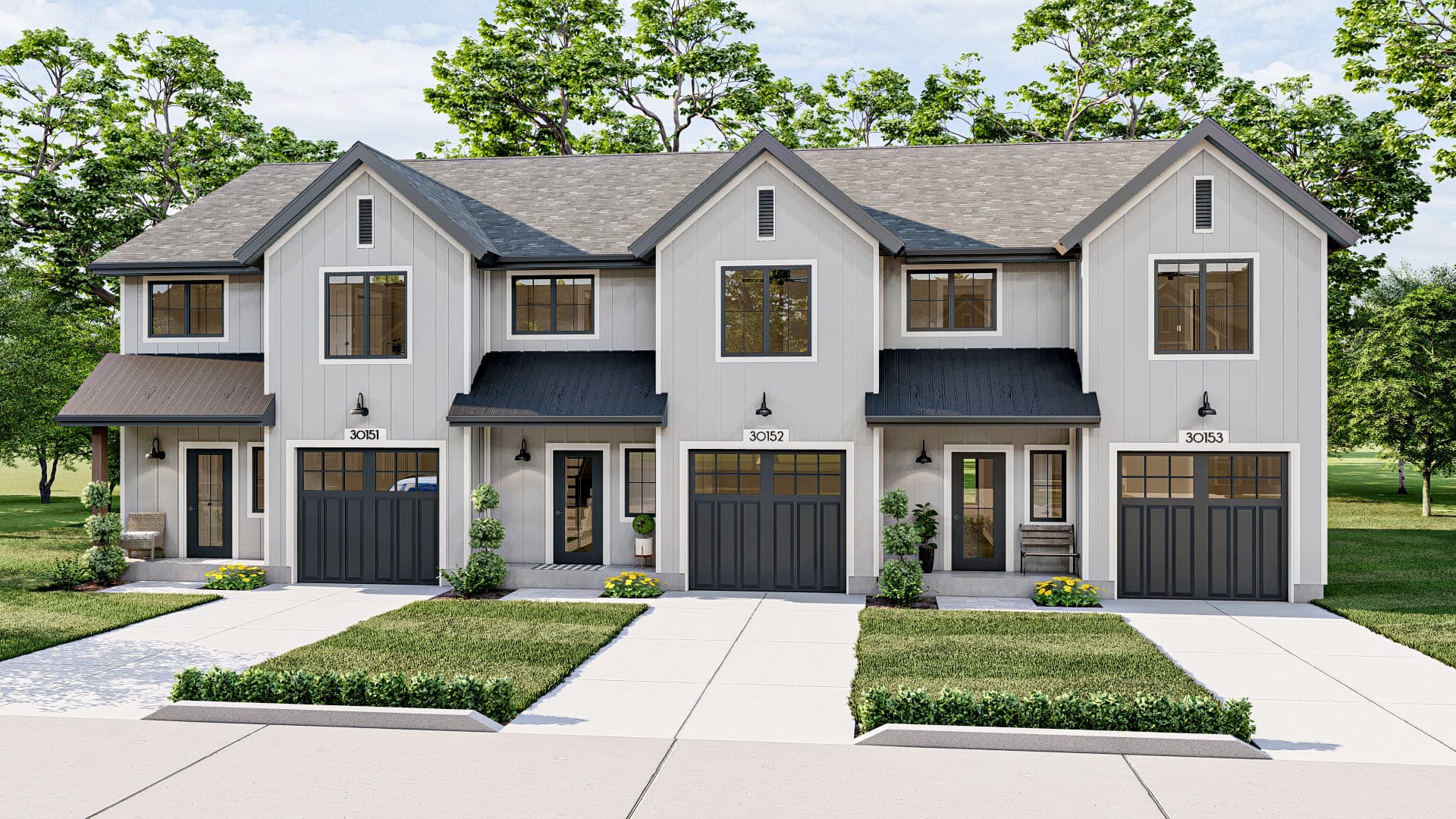
Multifamily Properties in Houston, TX
Stabilize income with professionally managed Houston multifamily assets aligned to regional demand trends.
About Multifamily Properties
Multifamily property remains one of the most frequently chosen replacement property types in 1031 exchanges, and Houston, TX gives investors a genuinely deep market to evaluate rather than a thin niche. The metro's population growth, driven by a diversified economy spanning energy, healthcare, aerospace, and the Port of Houston's logistics activity, supports sustained apartment demand across a wide range of submarkets, from close in urban neighborhoods to fast growing suburban corridors along the outer loops.
Because multifamily assets generate income through many individual leases rather than a single tenant relationship, they carry a different risk profile than single tenant commercial property, and evaluating a candidate replacement property requires looking past the headline cap rate into occupancy trends, lease turnover, and the quality of on site management.
Why Multifamily Fits a 1031 Timeline
Multifamily assets are generally easier to underwrite quickly than more specialized property types, since rent rolls, trailing operating statements, and comparable sales data are widely available across most Houston, TX submarkets, which helps investors move through due diligence inside the forty five day identification window. Professional third party management is also common in this asset class, which matters for exchange investors who want a passive holding rather than a hands on operating business, since actively managing the day to day of a property can raise separate questions about whether the holding still qualifies as investment property under Section 1031.
Financing timelines for multifamily acquisitions vary depending on whether the investor is using agency debt, a bank balance sheet loan, or all cash, and that financing timeline needs to be built into the overall exchange calendar so underwriting delays do not threaten the one hundred eighty day closing deadline.
What Houston Submarket Data Should Inform
Houston, TX is not a single multifamily market. Occupancy, rent growth, and new supply pipelines differ meaningfully between the urban core, the Energy Corridor, suburban submarkets along the Grand Parkway, and smaller secondary markets across the metro, and a property that looks attractive on a citywide average can be misleading once evaluated against its specific submarket's supply pipeline and absorption trends. We evaluate candidate replacement properties against submarket specific occupancy history, rent comparables, and any new construction under development nearby that could pressure rents or occupancy over the investor's expected holding period.
This service supports Houston, TX investors identifying multifamily replacement property locally as well as those using the metro's data as a comparison point against other markets nationwide, since 1031 identification rules allow replacement property anywhere in the United States, not just within the investor's home market. Due diligence coordination, financial review of rent rolls and operating statements, and closing coordination all run against the forty five day identification and one hundred eighty day exchange deadlines that govern the transaction.
Class distinctions matter as much in multifamily as they do in office, and a Class A property in a newer Houston, TX suburb will underwrite very differently than a Class C property in an older part of the metro, even when both show similar current occupancy. Class C and older Class B assets can offer higher current yield, but they typically carry more deferred maintenance and capital expenditure risk, which affects both near term cash flow and the property's competitive position against newer supply nearby. We review each candidate's unit mix, average unit age, and any deferred maintenance identified during due diligence against the investor's intended holding period, since a property that looks attractive on trailing income alone can require capital investment that changes the return picture within the first few years of ownership.
Value add multifamily opportunities, where a property is acquired below market rent with a plan to renovate units and raise income over time, appeal to some exchange investors seeking a higher return than a fully stabilized asset offers, but they also require more active management and near term capital investment than a passive exchange investor may want. We help Houston, TX investors weigh a fully stabilized acquisition against a value add opportunity based on how much operational involvement they actually want post closing, since the exchange itself does not distinguish between the two, but the ownership experience afterward differs substantially.
Insurance costs have also risen meaningfully for multifamily property in the Houston, TX area in recent years, reflecting both regional weather exposure and broader insurance market trends, and underwriting a candidate property without confirming current insurance quotes can lead to an inaccurate view of net operating income. We obtain current insurance estimates as part of due diligence on any multifamily candidate rather than relying on the seller's trailing insurance expense, which may reflect a policy that will not renew at the same premium.
What's Included
- Comprehensive multifamily property market analysis in Houston, TX and nationwide
- Property identification within forty five day IRS deadline
- Financial analysis including rent rolls, operating statements, and cap rates
- Due diligence coordination including property inspections and title review
- Qualified intermediary coordination for secure fund handling
- Escrow management and closing coordination within 180 days
Common Situations We Handle
- Investors transitioning from commercial office buildings to multifamily portfolios
- Property owners seeking to increase rental income through apartment communities
- Investors looking to diversify from single-tenant retail properties
Example of Our Work
Service Type
Multifamily Properties
Location
Houston, TX
Scope
Identification and acquisition of $6.7 million in multifamily properties across Houston, TX and Dallas markets
Client Situation
An investor selling commercial properties needed to identify multifamily replacement properties within 45 days to complete a 1031 exchange, with specific requirements for professionally managed assets in growing Texas markets.
Our Approach
We activated our Texas multifamily network, conducted immediate property tours and financial analysis, coordinated with qualified intermediaries for secure acquisitions, and completed all purchases within the 180-day exchange period.
Expected Outcome
Successfully acquired three multifamily properties totaling 342 units with 94% average occupancy, establishing a stable, professionally managed portfolio while preserving full tax deferral.
Contact us to discuss your multifamily property needs in Houston, TX. We can share references upon request.
Educational content only. Not tax, legal, or investment advice.
Frequently Asked Questions
What makes multifamily properties suitable for 1031 exchanges in Houston, TX?
Multifamily properties in Houston, TX are highly suitable for 1031 exchanges due to stable rental demand from the city's growing population and diverse economy. These properties offer consistent cash flow, professional management options, and the ability to meet like-kind exchange requirements while providing long-term appreciation potential in Houston, TX.
How do you identify multifamily properties within 45 days?
We use our extensive Houston, TX broker network and nationwide database to quickly identify multifamily properties meeting exchange criteria. Our process includes immediate market analysis, property tours, and financial review to ensure suitable replacement properties can be located and acquired within the forty five day identification and one hundred eighty day exchange periods.
What occupancy rates should I expect for multifamily properties?
Well-managed multifamily properties in Houston, TX typically maintain 92-96% occupancy rates, though this varies by property age, location, and amenities. Our property identification focuses on assets with proven occupancy stability and experienced management teams that can maintain high occupancy levels throughout market cycles.
How does qualified intermediary coordination work for multifamily acquisitions?
Qualified intermediaries facilitate secure fund transfers for multifamily property acquisitions in Houston, TX, holding exchange proceeds in segregated accounts until replacement properties close. Our coordination ensures all documentation meets IRS requirements and that the acquisition occurs within the one hundred eighty day exchange period.
What are the typical cap rates for multifamily properties in Houston, TX?
Multifamily properties in Houston, TX currently offer cap rates ranging from 4.5% to 6.5%, depending on property class, location, and condition. Our nationwide network allows investors to compare Houston, TX opportunities with other major markets to optimize returns while maintaining exchange compliance.
How do you handle tenant-related issues in multifamily exchanges?
Tenant management is typically handled by professional management companies for multifamily properties in Houston, TX, allowing investors to maintain passive ownership. We ensure all tenant leases and occupancy information are properly documented for exchange purposes, focusing on properties with stable tenant bases and experienced onsite management.
Ready to Get Started?
Contact our Houston exchange specialists to discuss your multifamily properties needs.
Start Your Exchange