Texas Medical Center, TX 1031 Exchange
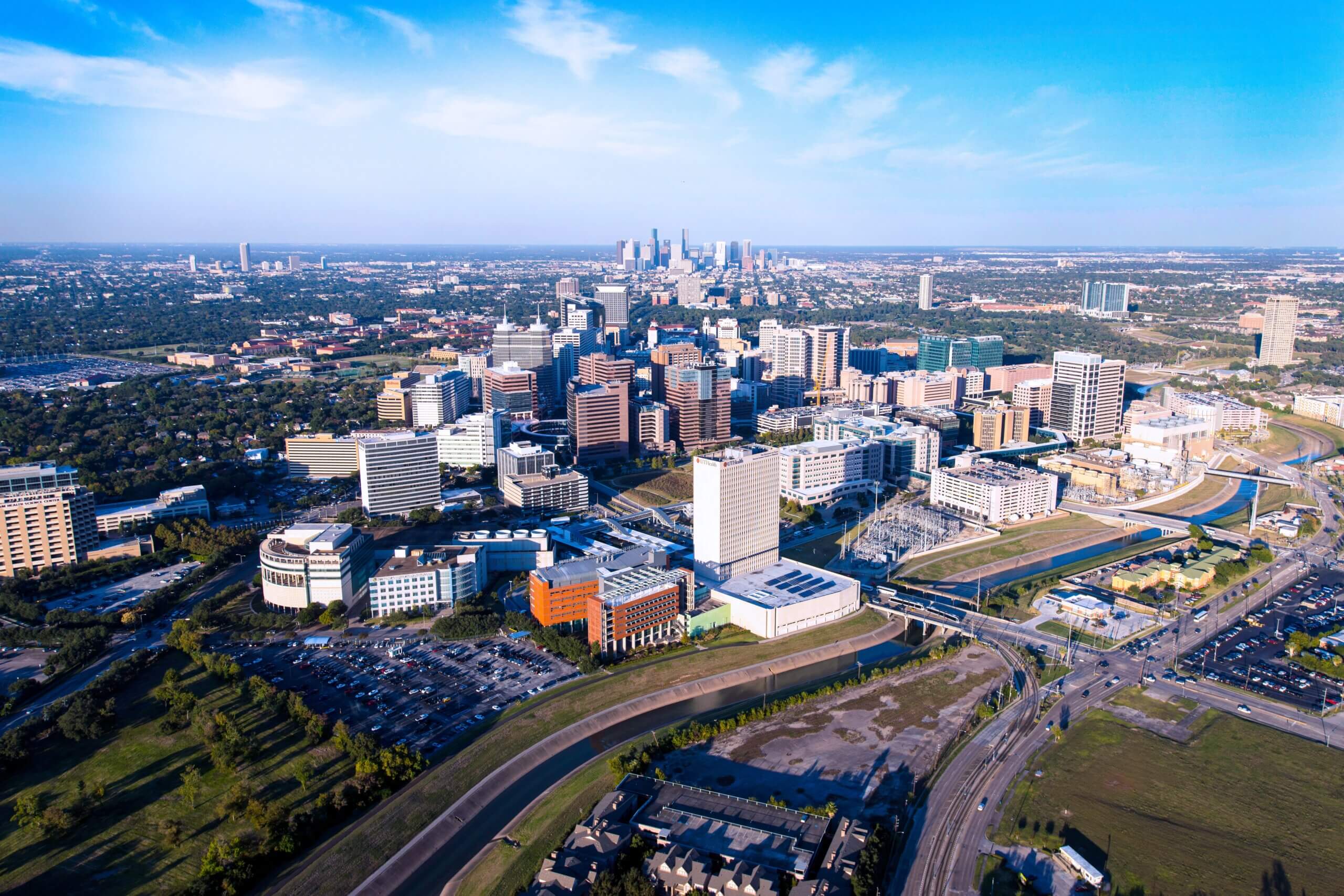
Houston AreaTexas Medical Center represents the world's largest medical complex and a prime destination for healthcare-focused 1031 exchange investments in Houston, TX. Spanning 1,345 acres with 21 hospitals, 10 specialty institutions, and over 10 million annual patient visits, this area offers specialized real estate opportunities in one of America's fastest-growing healthcare markets.
The district attracts leading healthcare providers, research institutions, and medical device companies, creating demand for specialized facilities including medical office buildings, research labs, and senior living communities. The area's proximity to major universities supports biotech and pharmaceutical research, while convenient access to downtown Houston and surrounding suburbs enhances commuter appeal.
Competitive property tax rates (typically 1.8% to 2.2% total, including all taxing entities) and Texas' business-friendly environment make medical center investments particularly attractive for tax-deferred exchanges. The district's concentration of healthcare employers provides stable demand for housing and commercial space, with excellent public transportation connections to residential areas.
Our nationwide property identification expertise helps investors navigate complex healthcare regulations while finding suitable replacement properties across all major markets. Texas Medical Center's status as a global healthcare destination ensures long-term appreciation and income growth potential for qualified investors.
What's Actually Trading Around the Medical Center
Medical office buildings with hospital-system or physician-group tenants make up the core of what trades around Texas Medical Center, alongside staff and student housing serving the tens of thousands of people who work or study on campus daily, and research or lab space tied to the TMC3 innovation campus. Medical office tends to draw the most competition among 1031 buyers because leases are typically longer-term and tenant credit is stronger than in a general office building. Research and lab space tied to TMC3 is a newer, smaller category that trades on different underwriting entirely, since institutional and university-affiliated tenants often sign under different lease structures than a typical medical practice.
Corridors That Define the Search
A Med Center-area search generally covers the medical office cluster along Fannin and Holcombe, staff-housing product in South Main and the Museum District spillover blocks, and the TMC3 research corridor where lab and life-sciences space is still being built out. Properties directly inside the TMC campus boundary attract institutional-level competition, so investors are often better served identifying comparable medical office just outside the core along Holcombe or in South Main.
Sequencing the 45-Day Window Around Institutional Expansion
Because TMC institutions periodically announce new research or clinical space that reshapes nearby demand, we confirm a candidate's tenant mix and any pending institutional lease commitments the same week the qualified intermediary is engaged. A medical office building that looks like a straightforward replacement can become significantly more competitive if a nearby institution announces an expansion that draws new physician-group demand into the same corridor. We treat any publicly announced institutional expansion as a signal to move faster on comparable candidates nearby, since demand shifts here tend to ripple outward from the specific building or block where the expansion is happening.
Diligence Items That Get Missed
Certificate-of-need requirements for certain clinical uses, shared-parking agreements common to medical office condominiums, and tenant-improvement obligations tied to specialized buildouts like imaging suites or surgical space are the items most likely to surface late in a Med Center replacement search. Confirming these before the identification notice is filed keeps the closing calendar from slipping, since specialized medical buildouts often extend a lender's underwriting timeline beyond what a standard office closing requires.
Life-Sciences and Lab Space as a Growing Category
The TMC3 campus has expanded the range of what counts as medical-related real estate beyond traditional clinical office to include wet-lab and life-sciences space built to accommodate ventilation, vibration control, and specialized utility loads that a standard office shell doesn't provide. Investors considering lab space as replacement property should confirm a building's infrastructure specifications match what a life-sciences tenant needs, since retrofitting a conventional office floor for lab use is a materially different undertaking than a standard tenant improvement.
Popular Investment Paths
Medical Office Buildings
Texas Medical Center's concentration of healthcare providers creates consistent demand for specialized medical office space with long-term triple-net leases.
Learn MoreQualified Intermediary Services
Complex healthcare transactions require secure QI management to handle regulatory compliance and maintain tax deferral during facility acquisitions.
Medical Staff Housing
Healthcare professionals seek convenient housing near Texas Medical Center, with premium rents supported by the area's critical workforce demands.
Learn MoreHealthcare Compliance
Medical center investments require specialized knowledge of healthcare regulations and accreditation standards to ensure investment viability.
Medical Research Facilities
Biotech and pharmaceutical research facilities benefit from proximity to universities and medical institutions, offering stable long-term leases.
Learn MoreHealthcare Market Analysis
Texas Medical Center's specialized market requires detailed analysis of healthcare trends and regulatory changes to identify optimal investment timing.
Property Types Available
Market Highlights
- High-income demographics
- Property value appreciation
- Favorable tax environment
Frequently Asked Questions
What property types are common in Texas Medical Center, TX exchanges?
Medical office buildings, research facilities, and healthcare staff housing are the most common property types in Texas Medical Center, TX 1031 exchanges due to the area's specialized healthcare focus.
How does Texas Medical Center, TX compare to other medical districts?
Texas Medical Center, TX is the world's largest medical complex with 21 hospitals and 10 million annual patients, offering unmatched scale and stability compared to other healthcare districts.
Are there special regulations for Texas Medical Center, TX properties?
Texas Medical Center, TX properties may be subject to healthcare-specific zoning and accreditation requirements that require specialized expertise for 1031 exchange compliance.
What transportation options serve Texas Medical Center, TX?
Texas Medical Center, TX benefits from excellent access via major highways, public transportation including METRORail, and proximity to George Bush Intercontinental Airport.
Why does medical office space near Texas Medical Center draw more competition than general office in a 1031 search?
Medical office tenants tend to sign longer leases and carry stronger credit than general office tenants, and demand from physician groups and hospital systems around the world's largest medical complex stays consistent even when the broader office market softens, so identified candidates here often see more competing offers before day 45.
Example of the type of engagement we can handle
Location
Texas Medical Center, TX
Situation
Healthcare investor needed replacement for California medical office building
Our Approach
Located Texas Medical Center facility meeting all identification requirements within 30 days
Expected Outcome
Completed exchange with $3.2M tax deferral and improved lease terms
Find Properties in Texas Medical Center
We help Houstonians find replacement properties for their 1031 exchanges. We specialize in Houston and Texas, but can find you properties in all 50 states.
Get Started