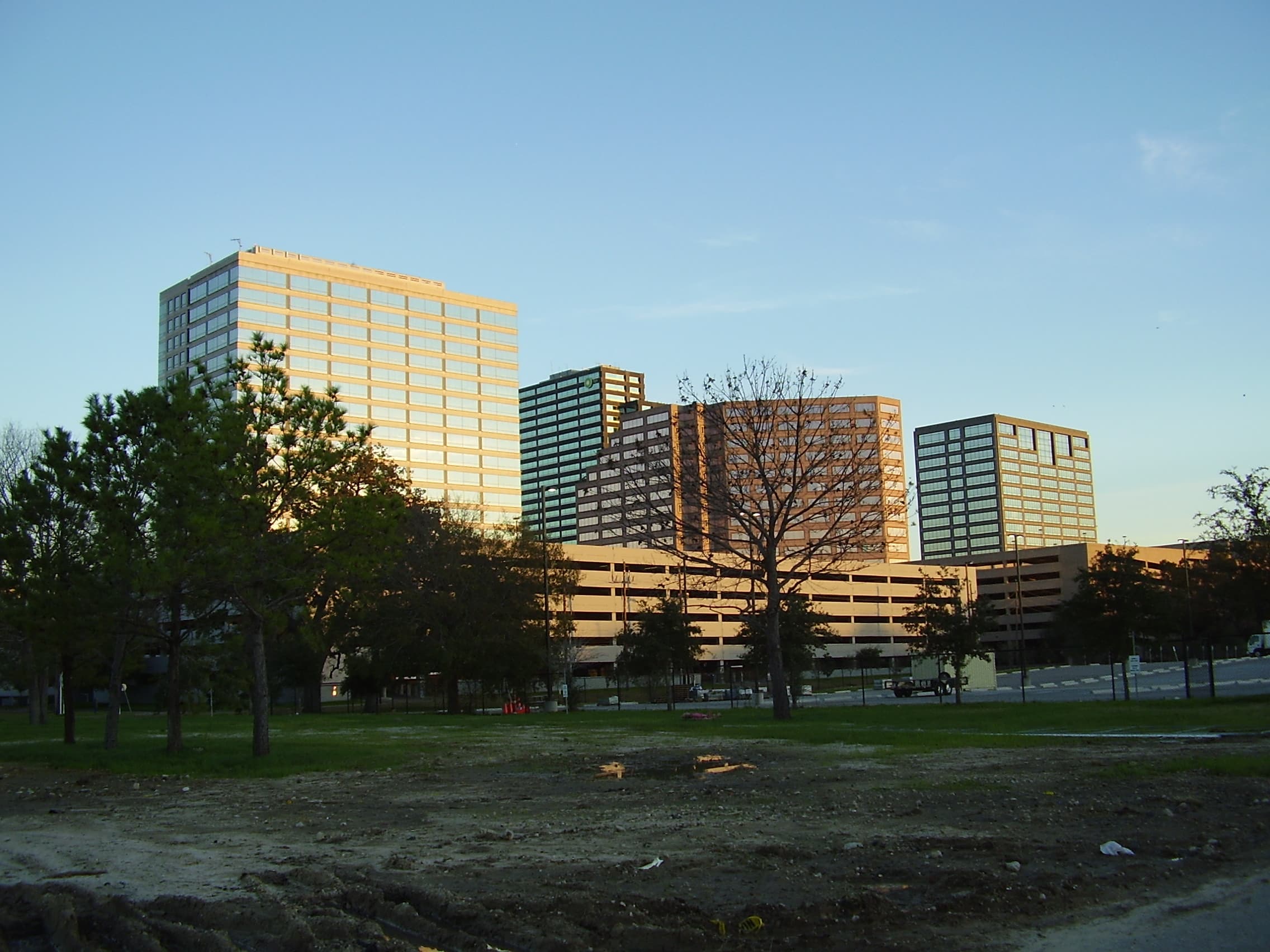
Energy Corridor, TX 1031 Exchange
Houston AreaThe Energy Corridor represents Houston's premier business district dedicated to energy and industrial companies, offering 1031 exchange investors access to Texas' most dynamic commercial real estate market. Spanning 35 square miles with over 300 energy-related companies and $1 trillion in annual economic impact, this area provides specialized opportunities in oil, gas, petrochemical, and renewable energy sectors.
The corridor features modern office parks, industrial complexes, and flex spaces designed for energy industry tenants, with excellent access to Port Houston and major transportation infrastructure. Major employers including ExxonMobil, Chevron, and BP create stable demand for corporate facilities, while the area's growth supports logistics and distribution centers serving global energy markets.
Competitive property tax rates (typically 1.8% to 2.2% total, including all taxing entities) and Texas' lack of state corporate income tax make the Energy Corridor particularly attractive for energy sector investments. The district's proximity to major highways and the Port of Houston facilitates international trade and logistics operations.
Our nationwide property identification services help investors navigate the complex energy market while finding suitable replacement opportunities across all major commercial sectors. The Energy Corridor's proven track record of job growth and economic stability ensures long-term value appreciation for qualified 1031 exchange investors.
What's Actually Trading in the Energy Corridor
The Energy Corridor's investment sales activity tracks the energy sector's own cycle: Class A and B office towers along Eldridge Parkway and Interstate 10 trade at a discount when energy employment softens and tighten up when it recovers, while flex and light-industrial space serving oilfield-services and engineering firms along Beltway 8 has stayed comparatively stable through both parts of the cycle. Investors identifying office replacement property here need to underwrite the specific tenant's sector exposure, not just the building's occupancy rate. Corporate campus assets leased to a single major operator sit at the far end of that spectrum, offering long-term stability as long as the tenant's own commitment to the corridor holds.
Corridors That Define the Search
A typical Energy Corridor search covers the I-10 frontage between Beltway 8 and the Grand Parkway, the Eldridge Parkway office cluster around CityWestPlace, and the Beltway 8 flex-industrial belt that serves logistics and equipment tenants supporting the corridor's energy companies. Properties near the Addicks and Barker reservoirs carry additional floodplain due diligence that a lender will require regardless of how the building has performed historically. Buildings further west toward the Grand Parkway generally sit outside the reservoir pool area and face a more standard due diligence process.
Timing an Exchange Around a Cyclical Office Market
Because Energy Corridor office vacancy moves with commodity prices more than the broader Houston market does, we weigh a candidate's tenant concentration and lease rollover schedule heavily during the 45-day identification window. A building anchored by a single energy tenant on a lease expiring within a few years carries different underwriting than one with a diversified tenant roster, and that distinction often matters more here than the headline occupancy number.
Flood Diligence Near the Addicks and Barker Reservoirs
Properties in the reservoir floodplain pool area require a flood-history and drainage review before identification, since some buildings in this part of the corridor have taken on water during major regional flood events even outside a mapped floodway. Confirming a candidate's flood history and any completed mitigation work is one of the items most likely to surface late if it isn't checked before the 45-day notice is filed.
Positioning an Exchange for the Next Cycle Turn
Energy Corridor office pricing tends to lag the underlying commodity cycle by several quarters, so a building trading at a discount today may already be pricing in a recovery that hasn't shown up in leasing activity yet. We weigh where a candidate sits in that lag when comparing it against flex-industrial alternatives along Beltway 8, which have historically held value more consistently through both halves of the cycle and can make sense as a lower-volatility identification option for investors who want Energy Corridor exposure without the office-specific swings.
Popular Investment Paths
Energy Sector Office
Major oil and gas companies seek modern office space in the Energy Corridor, offering long-term leases and stable occupancy from Fortune 500 tenants.
Learn MoreIndustrial Facilities
Petrochemical and manufacturing operations require specialized industrial space with rail access and proximity to Port Houston for efficient supply chain management.
Learn MoreEnergy Market Analysis
The Energy Corridor's complex market requires specialized knowledge of oil/gas trends and regulatory changes to identify optimal investment opportunities.
Flex Industrial/Office
Energy companies need adaptable space for R&D, administrative functions, and light manufacturing, with the Energy Corridor offering modern flex facilities.
Learn MoreSecure Transaction Management
High-value energy sector transactions require specialized QI services to handle complex financing and regulatory compliance requirements.
Industry Compliance
Energy investments require specialized knowledge of environmental regulations and industry standards to ensure long-term investment viability.
Property Types Available
Market Highlights
- High-income demographics
- Major employment centers nearby
- Property value appreciation
- Favorable tax environment
Frequently Asked Questions
What industries dominate the Energy Corridor, TX?
Oil, gas, petrochemical, and renewable energy companies form the core of the Energy Corridor, TX economy, with over 300 energy-related businesses generating $1 trillion annually.
Are there environmental considerations for Energy Corridor, TX properties?
Energy Corridor, TX properties may be subject to environmental regulations and permitting requirements that require specialized expertise for 1031 exchange transactions.
How accessible is the Energy Corridor, TX for logistics?
The Energy Corridor, TX offers excellent access to Port Houston, major highways including I-10 and Beltway 8, and rail infrastructure supporting global logistics operations.
What property types perform best in the Energy Corridor, TX?
Office buildings, industrial facilities, and flex spaces serve the Energy Corridor, TX best, with stable demand from major energy companies and petrochemical operations.
How does the energy sector's cycle affect a 1031 exchange in the Energy Corridor?
Office vacancy and rents here move more closely with commodity prices than the broader Houston market, so we weigh a candidate building's tenant concentration and lease rollover schedule heavily during identification rather than relying on the headline occupancy rate, which can look healthy right up until an anchor tenant's lease comes up for renewal.
Example of the type of engagement we can handle
Location
Energy Corridor, TX
Situation
Oil services company needed replacement for aging industrial facility
Our Approach
Identified modern Energy Corridor warehouse meeting all identification criteria within 45 days
Expected Outcome
Completed 1031 exchange with $6.5M tax deferral and reduced operating costs
Find Properties in Energy Corridor
We help Houstonians find replacement properties for their 1031 exchanges. We specialize in Houston and Texas, but can find you properties in all 50 states.
Get Started